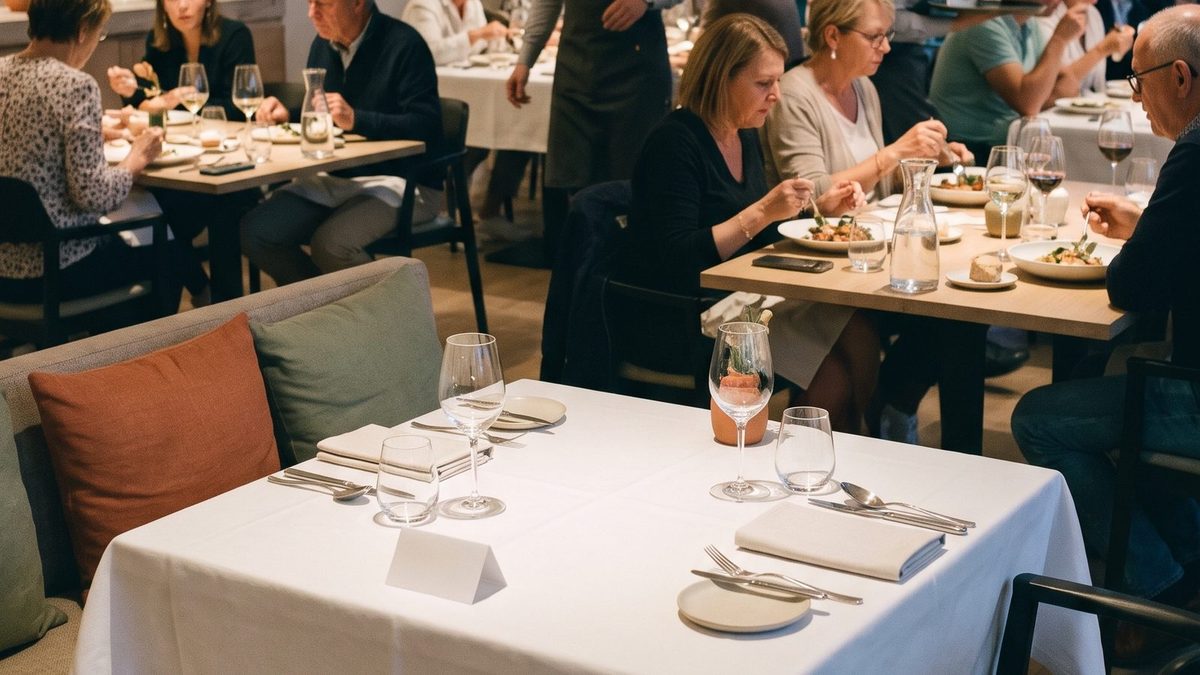
A no-show costs you more than the bill for that one table. You lose the revenue from the covers that never arrived, the work already done in your mise en place, the wages of staff scheduled for a full room, and the guests you turned away because you thought you were fully booked. Once you have done the maths, you never look at an empty table the same way again.
How often does it happen?
More often than most people think. A Lightspeed survey (February 2025) found that more than three quarters of Belgian restaurant owners have guests who fail to turn up without notice at least once a month. It is a live issue: in early November 2026, Flemish public broadcaster VRT ran a report on it, from deposits to blacklists.
And it nearly always happens at the worst possible moment: a Friday or Saturday night, or a holiday when you turned tables away.
How to work out what a no-show costs you
Grab a calculator. You need three numbers.
- Average spend per cover. Look at last month's till: total revenue divided by the number of covers.
- Covers that do not show up each month. Count them in your reservation book for a month. Most restaurants underestimate this.
- How many of those covers you could otherwise have sold. On a fully booked Saturday, nearly all of them. On a quiet Tuesday, fewer.
An example with round numbers: your average spend is €55 per cover and twelve covers fail to show each month, mostly at weekends. That is €660 in revenue you do not make. Over a year it is almost €8,000, before counting wasted preparation and wages.
The costs that never appear on the receipt
- Preparation. Produce already cut, cooked or ordered.
- Staff. You scheduled an extra person for a full room.
- Missed guests. The table you turned down for someone else that afternoon.
- Atmosphere. A half-empty room on a night that should have been full feels different for the guests who did come.
What helps against no-shows?
No single measure makes no-shows disappear. A combination does help, with each step catching part of the problem.
1. Remind guests, and make cancelling easy
Many no-shows are not ill will, just forgetfulness. An automatic reminder shortly before the reservation helps. What matters is that the guest can cancel or change the booking with one click from that same reminder. Guests who can cancel easily will do so, and then at least you have a chance to resell the table.
In TalloRes, confirmations and reminders go out automatically, in the guest's language (English, Dutch or French).
2. Ask for a deposit or prepayment
For restaurants with a high spend per cover, for large groups or on holidays, a reminder is often not enough. A financial threshold helps: guests who have paid show up.
With TalloRes you ask for a deposit or full payment per cover when guests book, right in your own booking widget. You do not need a separate payment system or payment links. You decide which services or events need it, so a weekday lunch stays easy to book.
3. A waitlist as a safety net
If someone does cancel, you want to fill that table as fast as possible. With the automatic waitlist in TalloRes, guests can sign up when you are fully booked. When a table frees up, the next guest on the list is offered the spot automatically. You do not have to call anyone.
4. Know your guests
Guests who feel recognised are less likely to let you down. With guest tags you see at every reservation who is a regular and who is coming for the first time. Read more in From no-show to loyal guest.
A simple action plan
- Count your no-shows this month and work out what they cost.
- Switch on automatic reminders, with an easy cancel button.
- Ask for a deposit on your busiest nights, on holidays and for large groups.
- Let a waitlist fill the tables that free up.
- Do the maths again after three months.
Frequently asked questions
How much does a no-show cost a restaurant on average?
It depends on your spend per cover and how full you are. Work it out for your own restaurant with the three numbers above: spend per cover, no-shows per month and how many of those seats you could otherwise have sold.
Can a restaurant ask for a deposit?
Yes, as long as you tell the guest clearly when they book. Set out in your terms when guests get their deposit back and when they do not.
Won't a deposit put guests off?
Do not ask for one on every reservation. Use it where the loss is biggest: your busiest nights, holidays, special menus and large groups. Guests who really want to come usually find it reasonable.
Do email reminders really work?
A reminder mainly catches the forgetful. The effect is strongest when the guest can cancel straight from the same email, so you can resell the table.
Want to see how deposits, reminders and the waitlist work together in your restaurant? See all features or try TalloRes free for 30 days, no credit card needed.